Lot of great pictures in this post. I would get the bracelet tested to see if it is sterling silver. We see a lot of these pieces come into the shop that have this small plating of sterling silver, but if you test the metal on the sides it often reveals nickel. Once we determine if the piece is nickel or silver then we can go forward trying to determine the artist. If it is nickel we can assume that we are trying to be tricked, it has a sterling mark and a hallmark stamp to deceive. If it is sterling silver we go forward and research the mark. The one thing is we don’t think of Singer jewelry being done in this style.
Now, we have two other pieces shown. A pair of earrings and a pendant. If you look at the hallmark this is a good lesson. You can tell the pendant hallmark has been stamped into the silver, but on the earrings you will notice the raise in the mark that seems to even create a shadow. That earring has been cast, which is also revealed on the front side by the texture and similar run on the overlay design, top left.
I have included images from Hougarts and Wright’s hallmark books. You will notice how the crescent is smaller than we find in the earring. Hallmarks can definitely change over time, and I am not familiar with Tommy Singer’s marks.
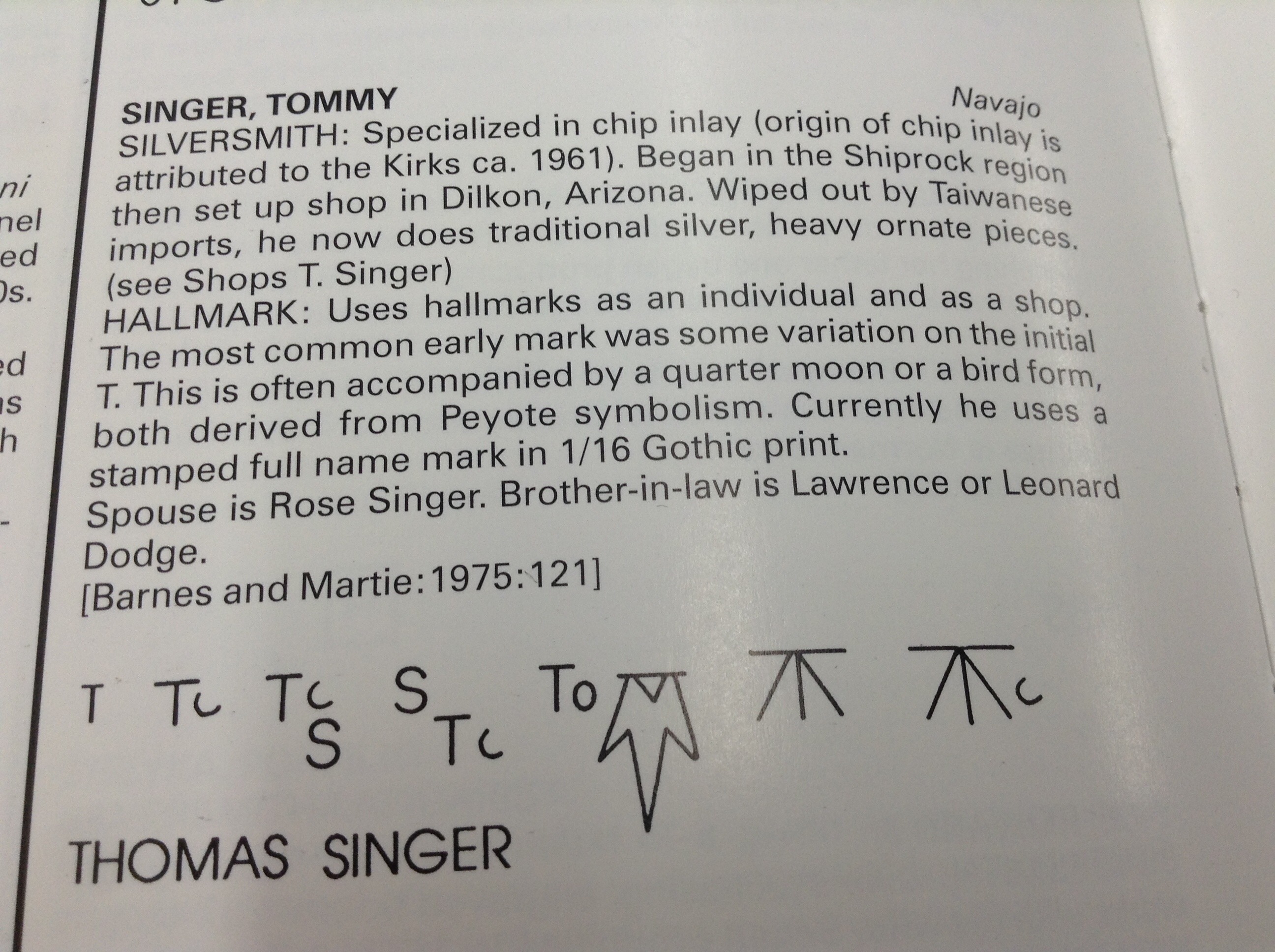
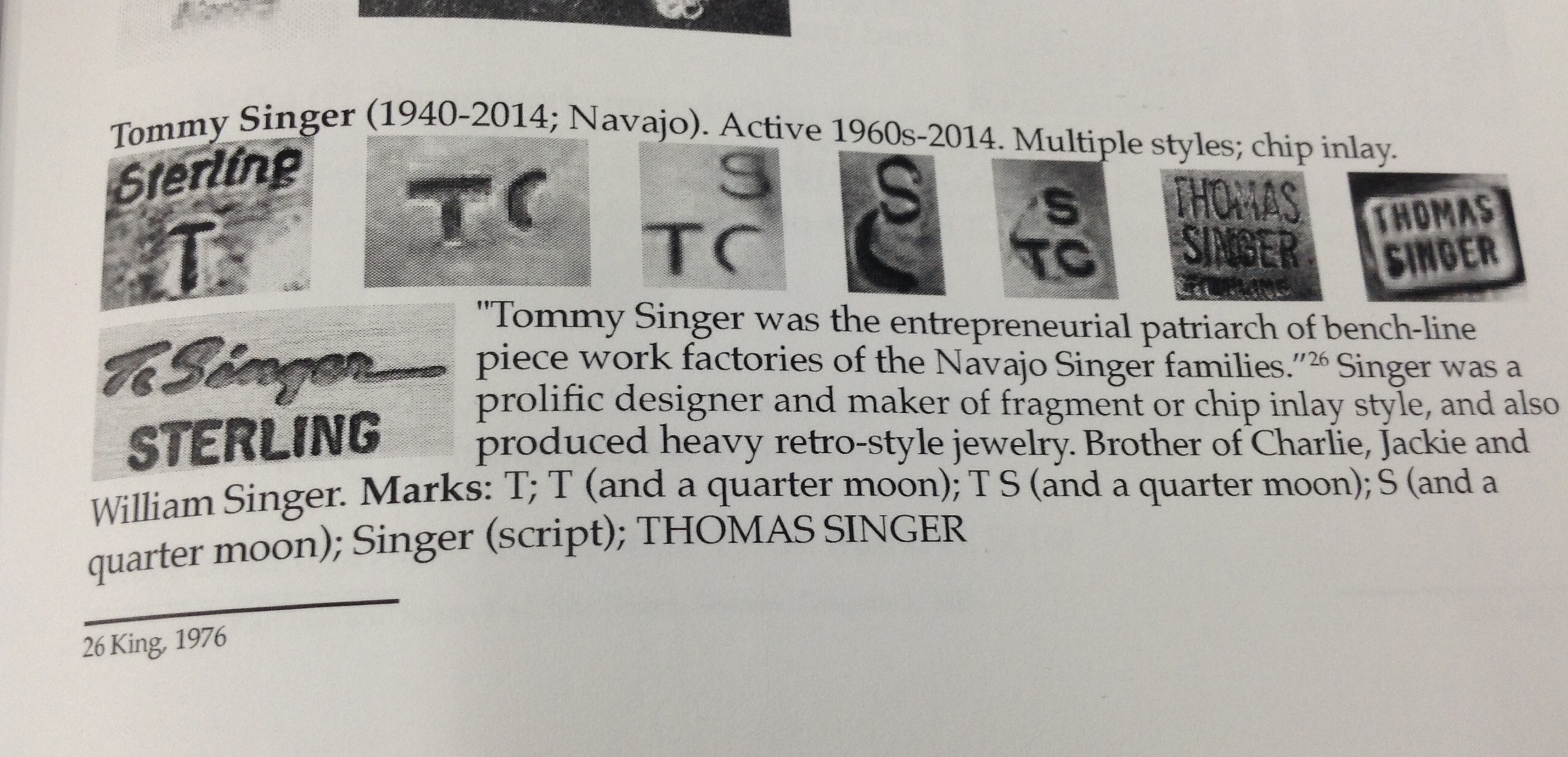
The late Steven J Begay grew up in the Holbrook area, close to where Tommy Singer had his shop. He talked about getting his start in those shops, helping Tommy Singer keep up with demand during the boom. Many times that is how it works with Navajo silversmiths, you have to learn somewhere. Gary Reeves worked in Harry Morgan’s shop. Kirk Smith helped several young silversmiths begin their careers by helping him make his pieces. Tommy Jackson is known to do this to help meet demand. This is common practice and I doesn’t take away from value. However, when the piece is cast with the artist’s hallmark that is when it takes away from the value.