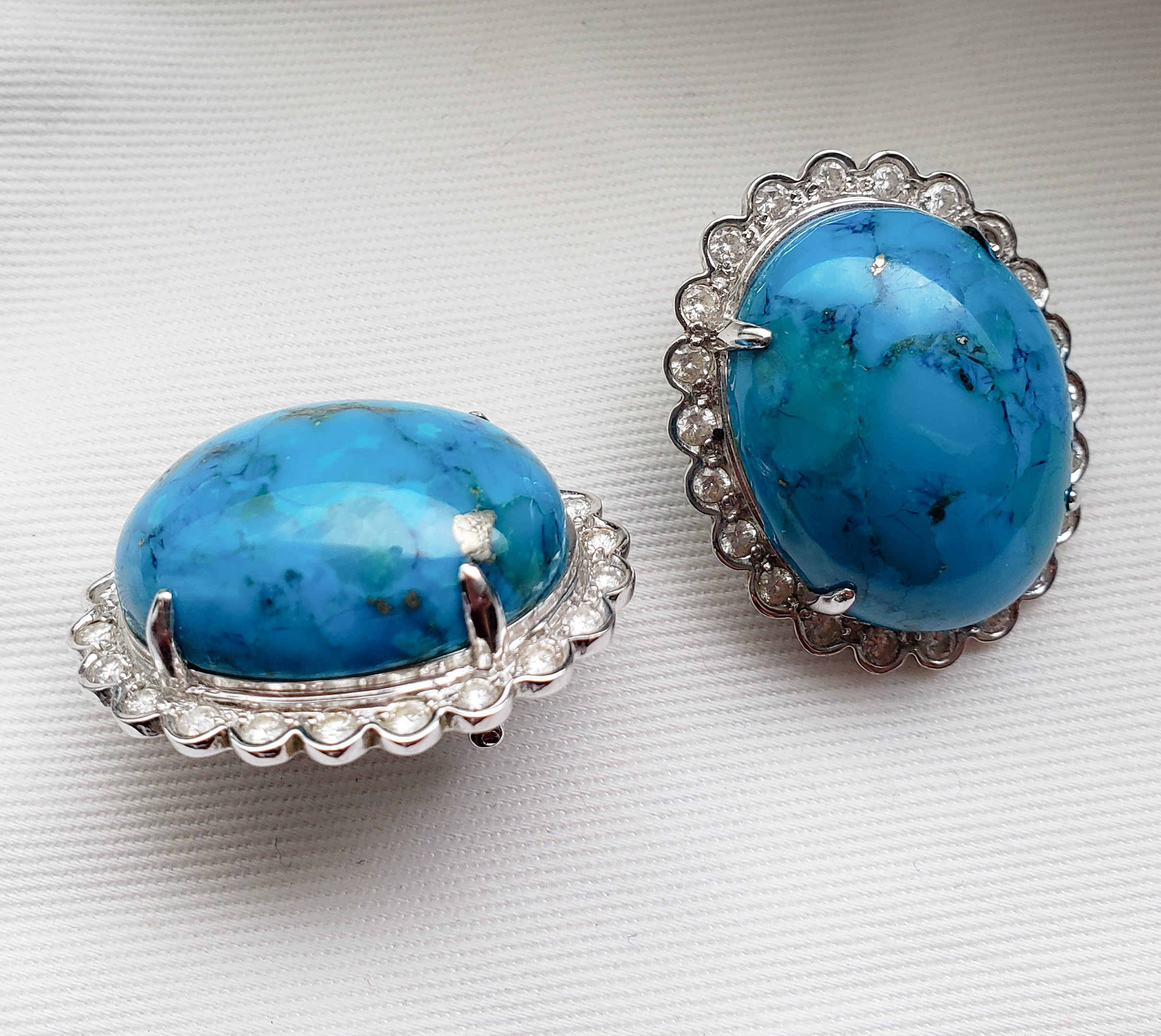
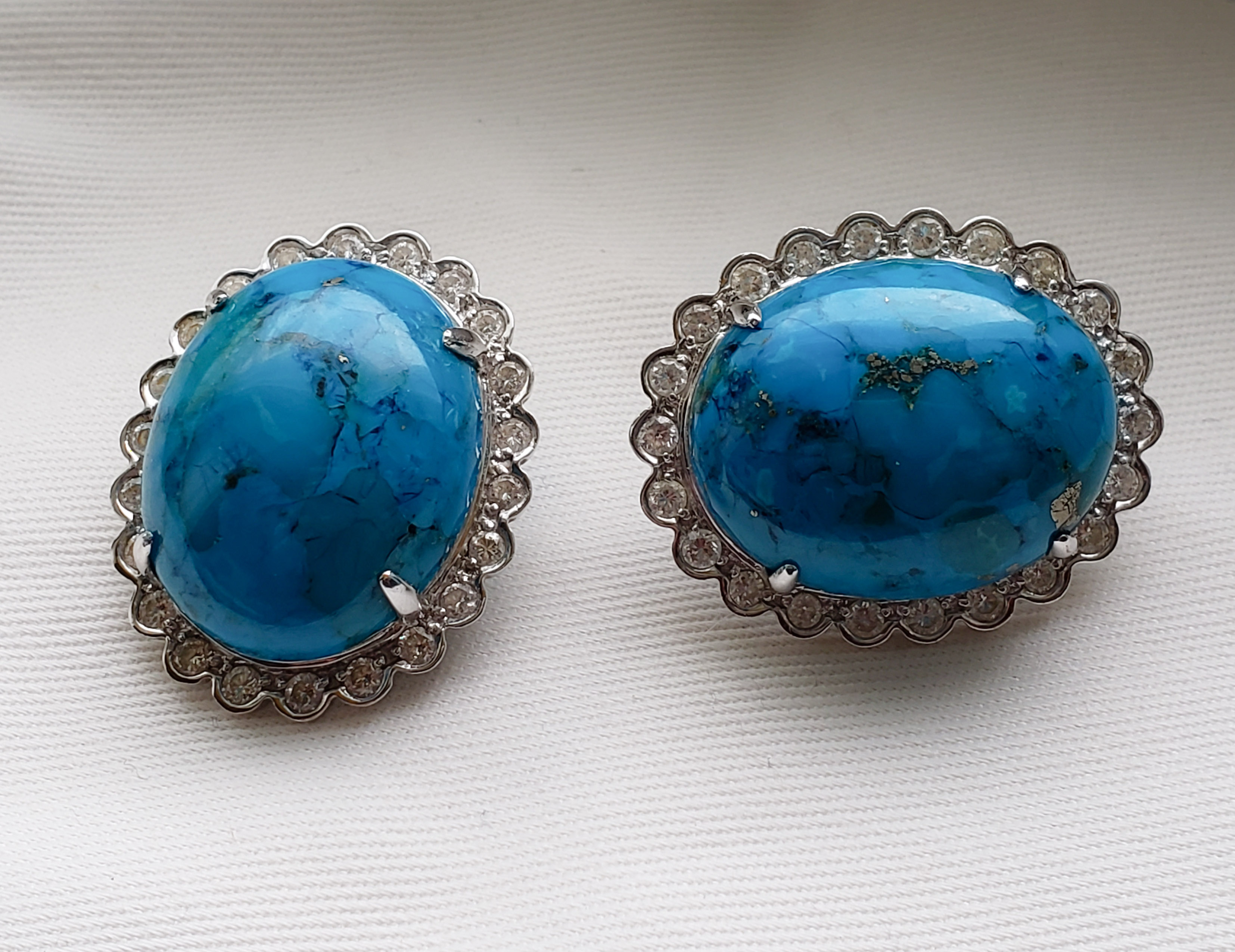
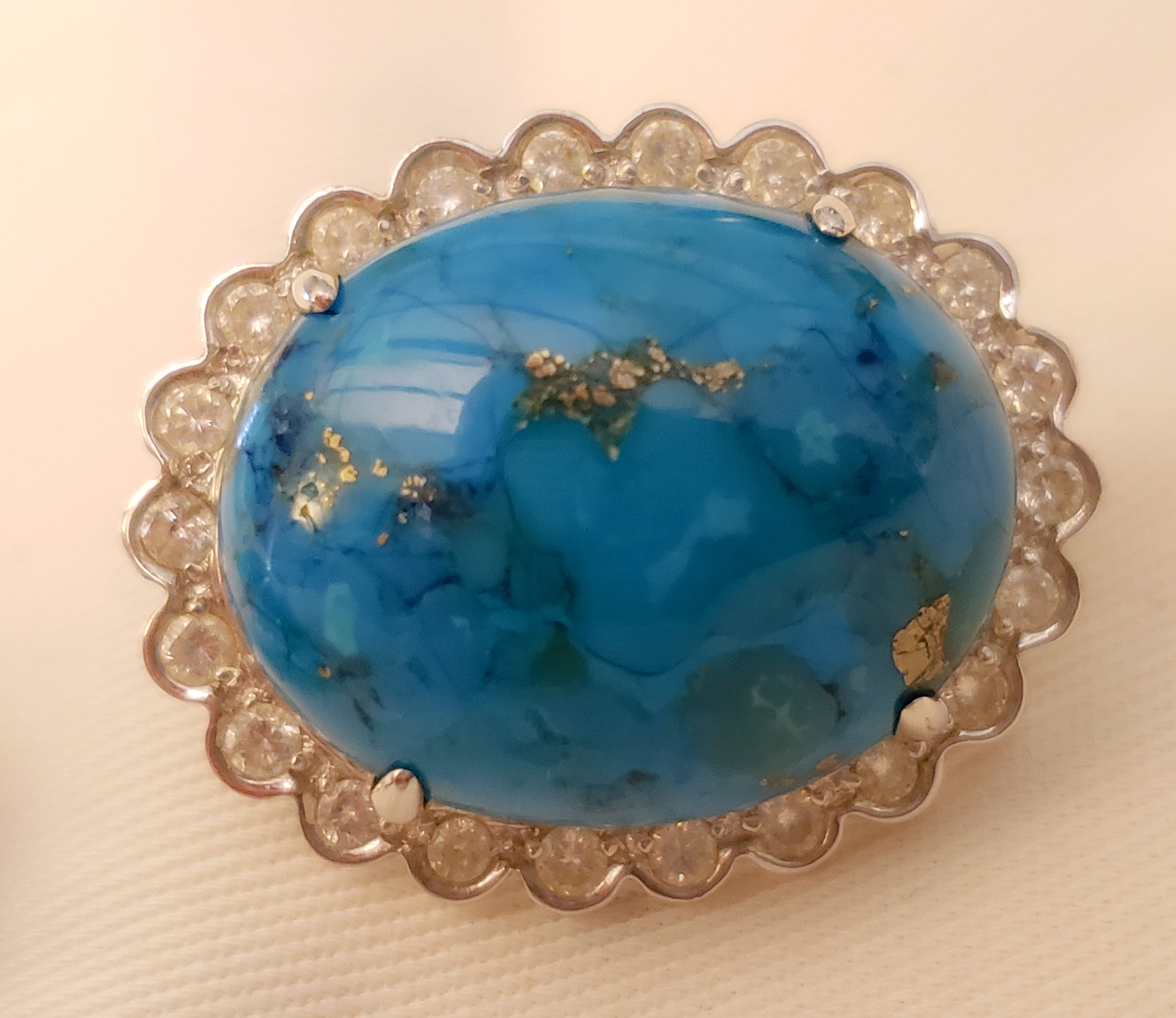
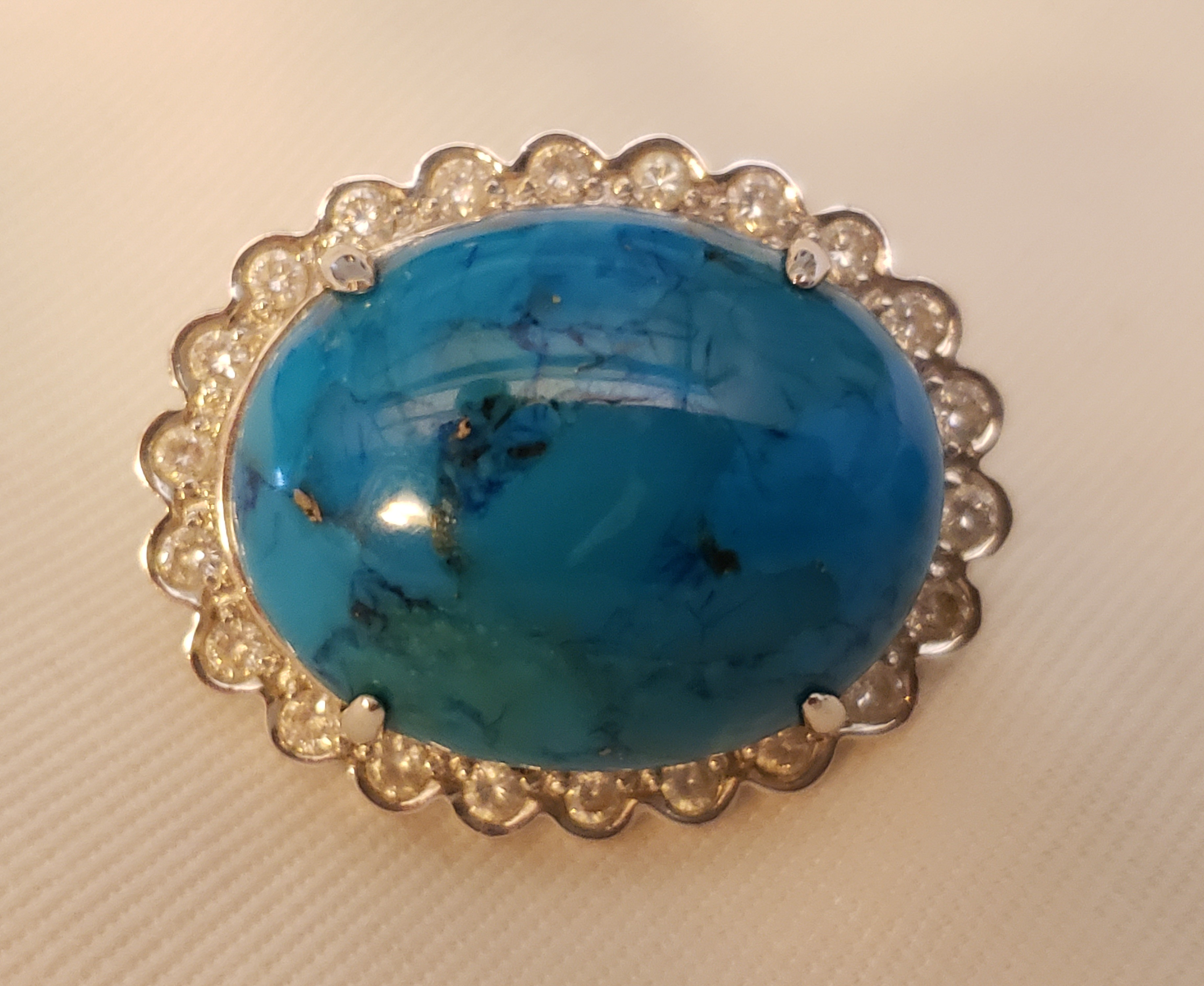
Can anyone help me identify this turquoise? I bought these earrings about 15 years ago from an estate sale in Oregon. They’re set in 18k white gold and surrounded by diamonds. One of the earring posts fell off and I’ve yet to have it repaired… I’ve tried to identify on my own and was thinking Lander or Blue Gem but also wondering if that’s wishful thinking. I’m in love with these gemstones, no matter the source, but would really like to know their provenance if anyone could help. Took pictures in natural light and lamplight. Thanks in advance!
2 Likes
Nice earrings Tate, I have some thoughts to share. 1st it would be extremely rare for someone to make gold and diamond mounts then use average or lesser turquoise in them. So I feel you should expect to find the highest grade turquoise in your set. The lavender pit turquoise from Bisbee has been sought after since the 1890’s but today is considered to have the richest natural color and is highly prized, worthy of gold and diamond settings. the only true way of determining a turquoise is through laboratory chemical analysis compared to a know reference source. Anything else is simply a guess by those who work with the material. I would guess Lavender is a good candidate but there are others to consider
Another turquoise to consider would be Morenci. It has been around just as long as the lavender pit and produced high grade turquoise and a byproduct to its copper industry. Morenci is known for its pyrite inclusions as yours shows-- but it is not the only turquoise to have pyrite inclusions.
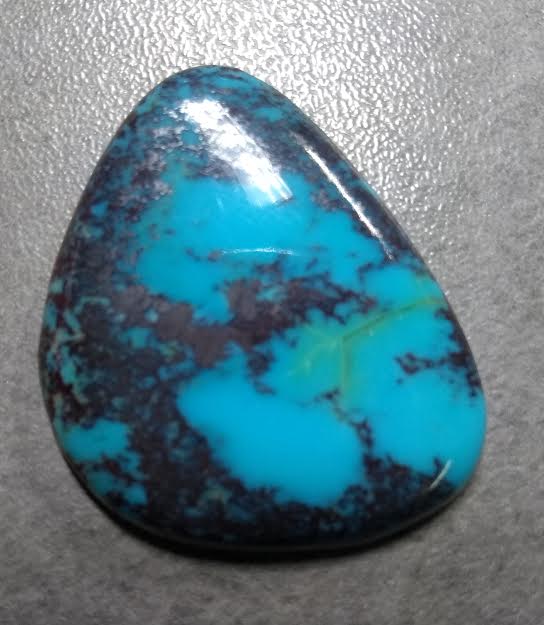
Your stone seems to have a slight green patch. I have included a photo of my Morenci it also has pyrites that look silver and there is an area of a green stain around a crack line. Considering its value it is another candidate for high dollar settings.
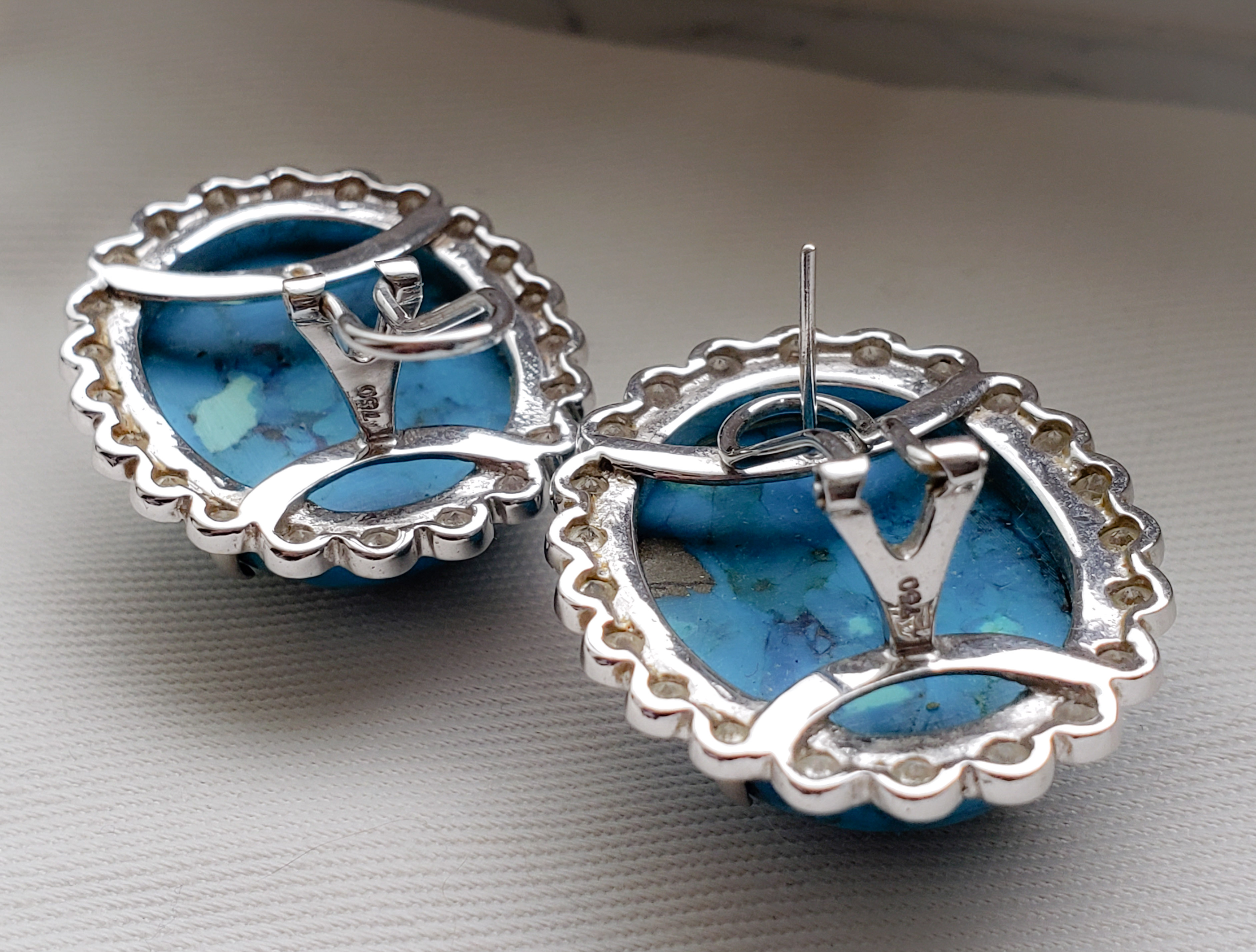
One thing that causes me concern is the off color patchwork on the back of the stone.
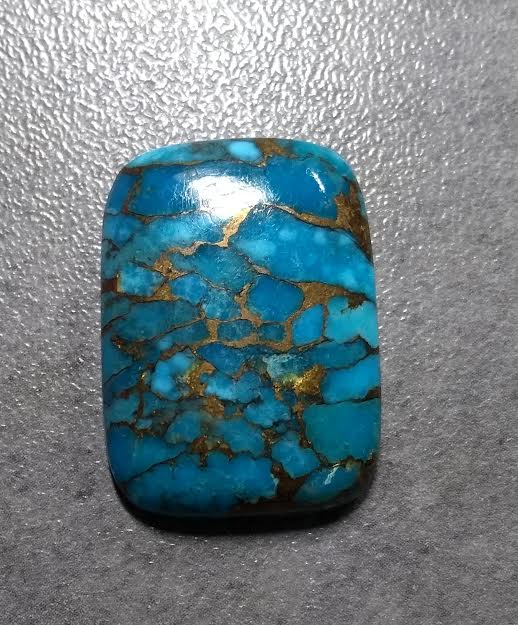
Some explaining…I have included a photo of reconstructed turquoise where pyrites have been
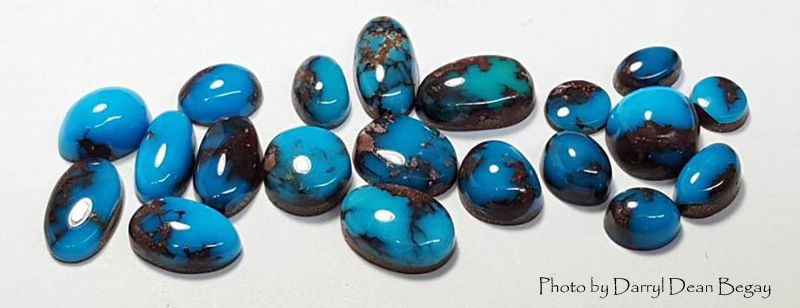
So why the light blue patch on the back? Possibly a filler material for a flaw in the stone. A lot of the turquoise I cut is backed with various materials to level and stabilize the stone for cutting. Most stones I leave the backing on and mount so that you don’t see the back of the stone. Some stones I grind away the backing so I can mount a lighter weight stone or show the back of the stone. This leveling of the back may leave crevices filled with the backing. This may be your case. It doesn’t devalue your stones. Backing has been an industry standard for many years.
My third bet would be a good clear cut of Bisbee…nothing wrong with that !! hope this helps, Kyle
1 Like
Sorry the photos got mixed up. Multi stones…Bisbee
Large triangle…Morenci
Rectangle …pressed block
1 Like
Wow, you are beyond fabulous  Thank you so very much for the insight and education! You’ve made some valid points and have given an excellent start for a “newbie” like myself to do further research. I’m a December baby, have always loved my birthstone but never truly understood all of the differences between the mines and color variations they produced. Turquoise is truly a fascinating and complex stone. I sincerely appreciate your reply:heart:
1 Like
Maybe it’s the pictures, but they look more crystalline than I would expect for natural American turquoise, along with those patches of color on the reverse. The thesis that you’d only find high-end turq in this sort of setting assumes known high quality. Without documentation on the diamonds and/or lab analysis, that’s a leap of faith.
There are composites out there that look like this, such as the stone marketed as copper blue or blue copper turq. I don’t say that’s what these are, just that there are materials less prized that can be used in jewelry found in the mainstream market.