Like the one buyer I saw that now has to offer less percentage for silver due to the refineries (not identified) not accepting any silver or only .999. What a champ “helping” out to take that silver off people’s hands.
3 Likes
it’s shortly after 9am 12/23/2025 & $70 has been breached
4 Likes


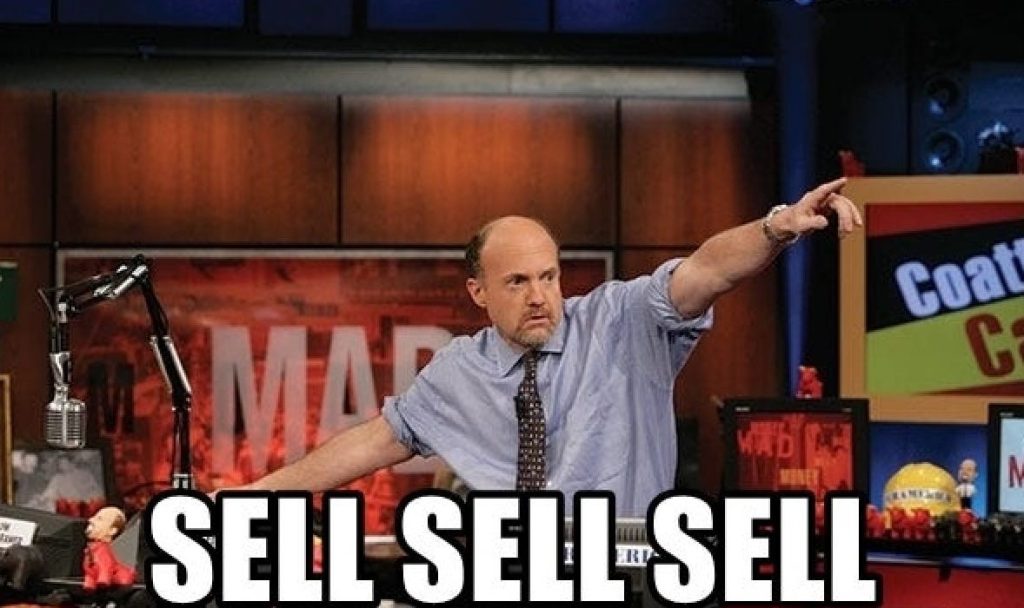
i’m beginning to look at my stash a little differently these days……
4 Likes
You don’t want Cramer telling you to sell. That usually means that you should buy..
4 Likes
Thunderbird Supply seems to be the lowest price for sterling. 18 gauge sheet is at $82/oz. Brutal market.
Silver, copper, and nickel are so high that silverplate is now worth refining.
2 Likes
Rio is at least $10 over that number. More and more I’m finding their pricing, management, and policies are increasingly disconnected from reality. A $10 bump over spot for a metal which in recent memory sold for $15 per Troy Ounce with all markups included is brutal enough, but selling at $20+ over spot for sterling represents a nearly 40% markup on the base value of the metal for milled sheet, and even more for milled wire and bezel stock which is outright robbery.
3 Likes
I’m holding onto my little stash with white knuckles @StevesTrail
4 Likes
I don’t blame you. At least you already have silver to make more jewelry for a while.
The big name silversmiths will have no problem affording silver when they can bring in $2K - $4K for a bracelet. It’s the small operator that will be hurt most. Very unfortunate.
6 Likes
ME TOO!
back in May silver was $33.11 when that luggage tag came home with me
paid about $20.14 but the melt value was only $11.49 

now that the silver price inched up a little I’m not giving my stash the stink eye no more 

5 Likes
Some of those higher end silversmiths also make more affordable jewelry, so it will hurt them also.
I can’t spend thousands on a single piece, so it will be interesting to see what happens with my jewelry budget in the future.
3 Likes
I know very little about all of this, but couldn’t an alternative route be that artists start sourcing broken sterling jewelry and/or unpopular and unknown sterling coins and re-melt them (and hammer into their own ‘sheets’ etc)?
1 Like
Absolutely. They should grab a scale and start visiting antique shops also. A lot of dealers are lazy and are lax on updating prices. I find a fair amount of sterling holloware that way. Their old retail price may now be well under scrap value.
2 Likes
I see your point. However, (referring to the higher end market only) looking at Garlands, even small rings are priced at $90 - $250. Add turquoise and you can go to $500. If the amount of actual metal for a ring is 1/3 ounce, an increase of $50/ounce adds less than $20 to the cost basis.
I think what will hurt sales is even if the silversmiths do not raise prices to account for increase metal costs, customers may look at existing prices and incorrectly relate them to the silver increase.
3 Likes
@mmrogers talked about this in another thread. I believe he felt that using old jewelry would not work well for them. But I am forgetting why. Michael, am I getting confused? We were talking about reading that some people on Facebook were discussing donating their unworn jewelry to Native artists.
2 Likes
My Ruben Saufki ring from Garland’s last year was 200.00; now an almost exact same ring of his is 250.00. There are items on their site that I remember from last year that are the same price, so at least the store is not raising prices on existing pieces (I noticed the same thing on the Twin Rocks site).
It will be interesting to see the prices on the artists’ work at the Eiteljorg Market this summer.
1 Like
Sorry to offend by use of the word “simple”. It was not meant in the way you interpreted it . I edited my post.
You did not offend me. I was merely giving an opinion. I’ll change mine also. Sorry.
1 Like
No worries either way. Good dialogue and clarification.
1 Like
Going back to that conversation, @Ziacat . My thought was donating unworn jewelry to Native Artists is a fine idea, but without strings attached to what they will do with it. I suspect most would find a way to resell the jewelry for the highest price possible, and use the proceeds for purchasing raw materials or expenses rather than melting it down and recycling the materials themselves, which is a noble and romantic idea in theory, but very impractical in practice.
6 Likes