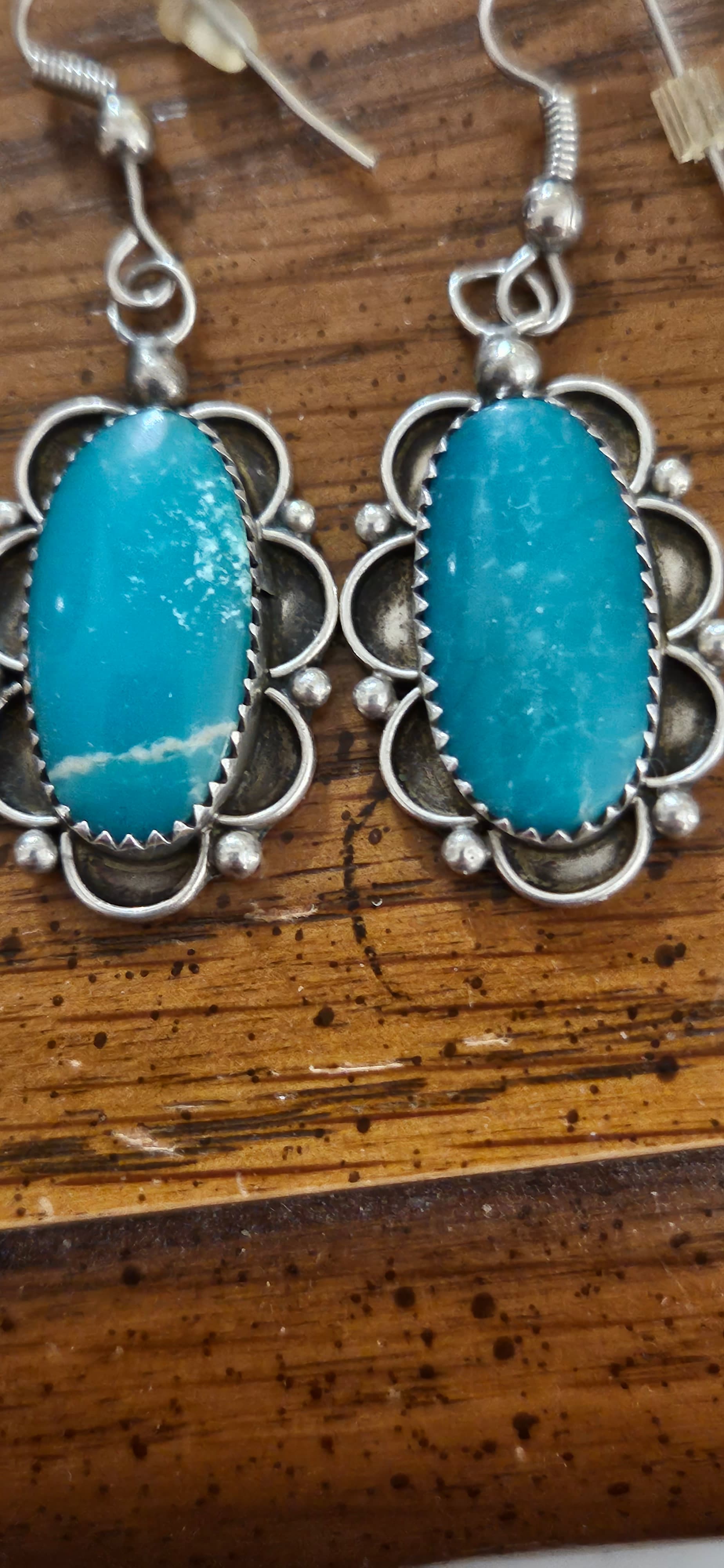
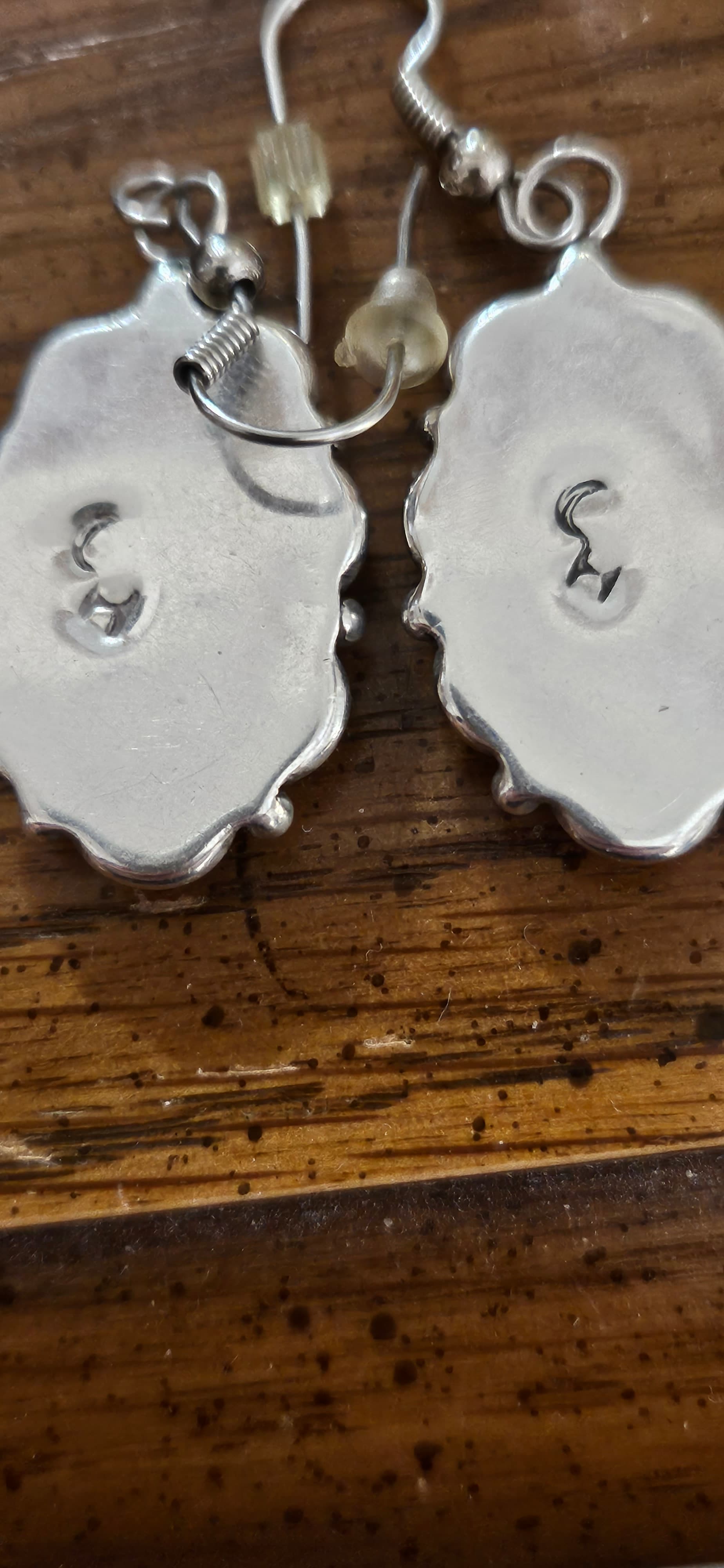
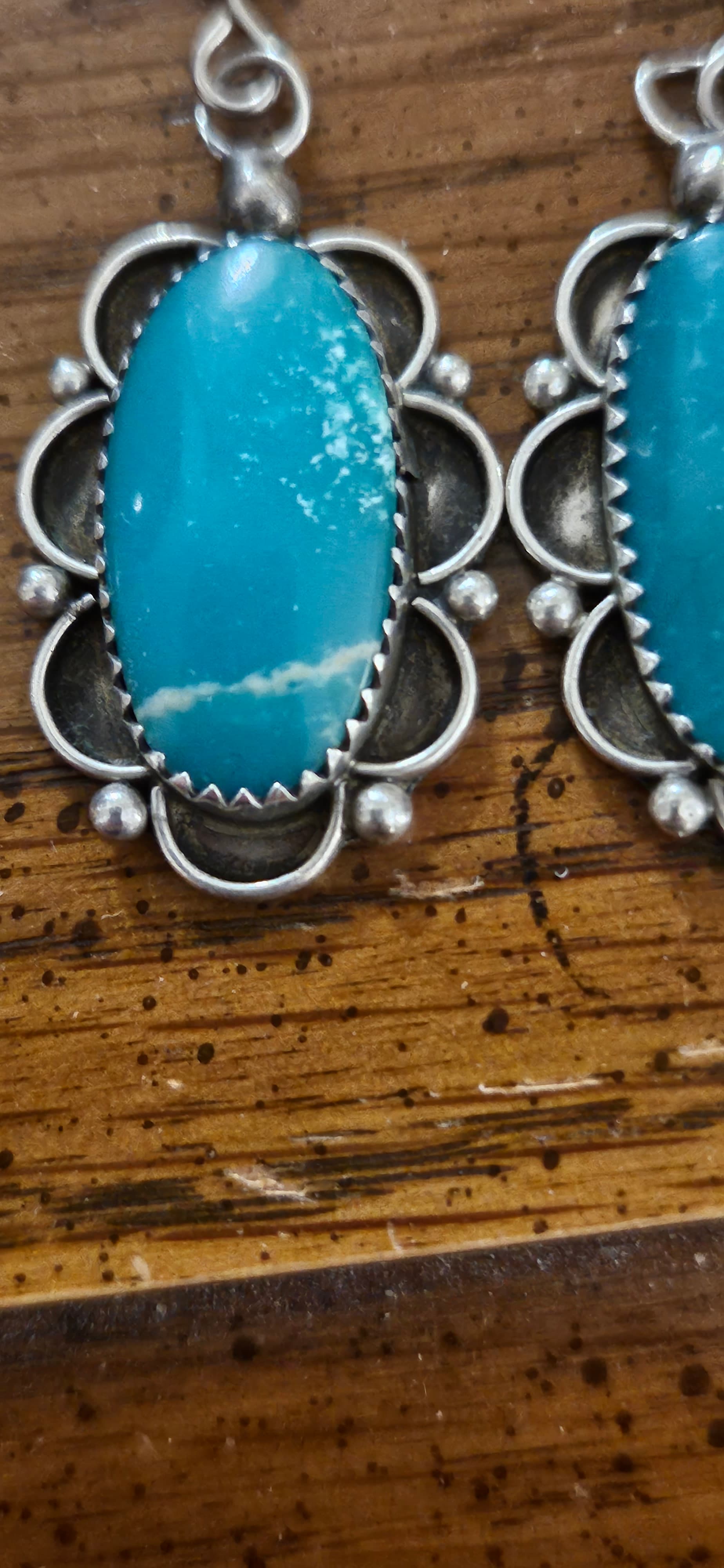
I’ve had these earrings for a while, the person I bought them from said she acquired some old turquoise that was put in these newly created earrings. The hallmark, looks like a stacked C and H, is on the Amerindien list of unknowns.
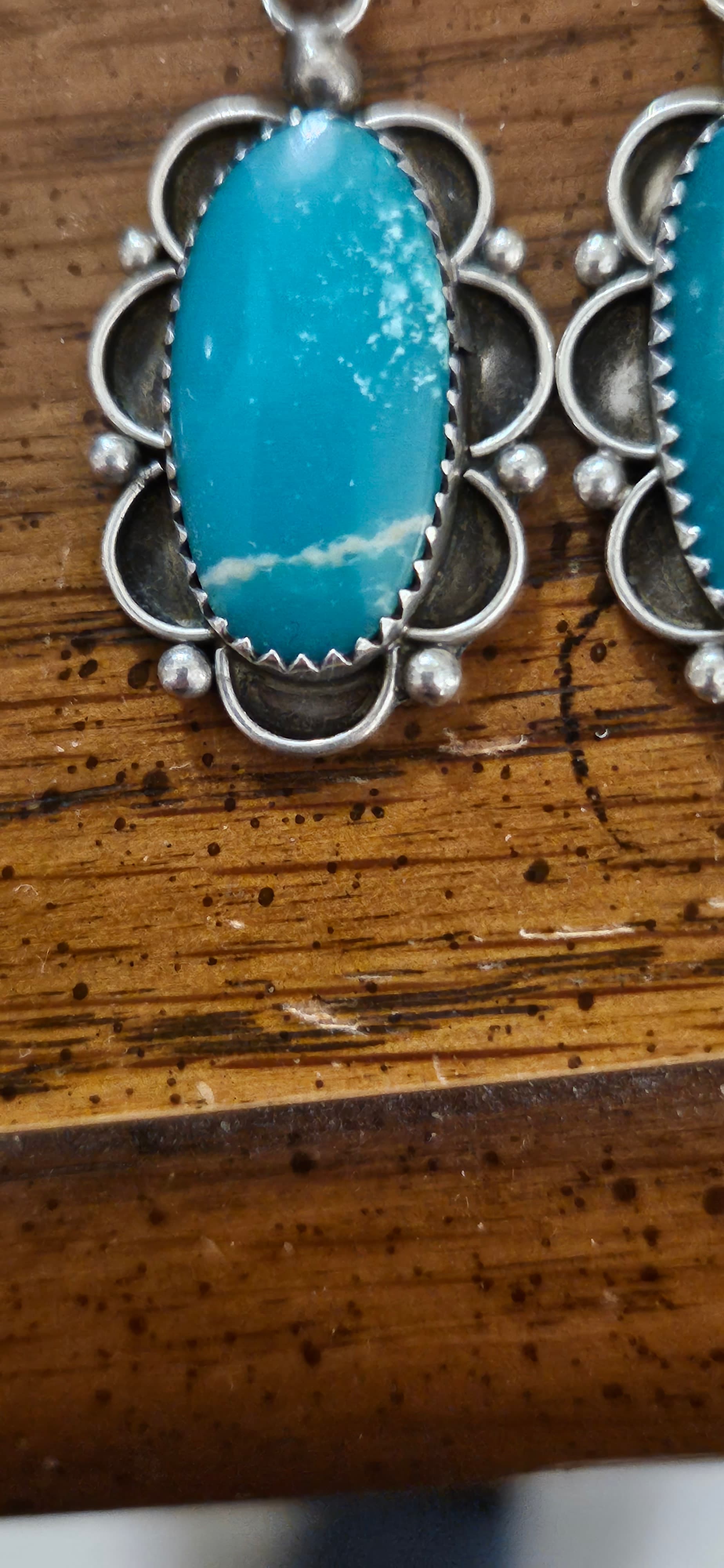
Turquoise? What about the white specks/streak? Appreciative of your informed opinions!
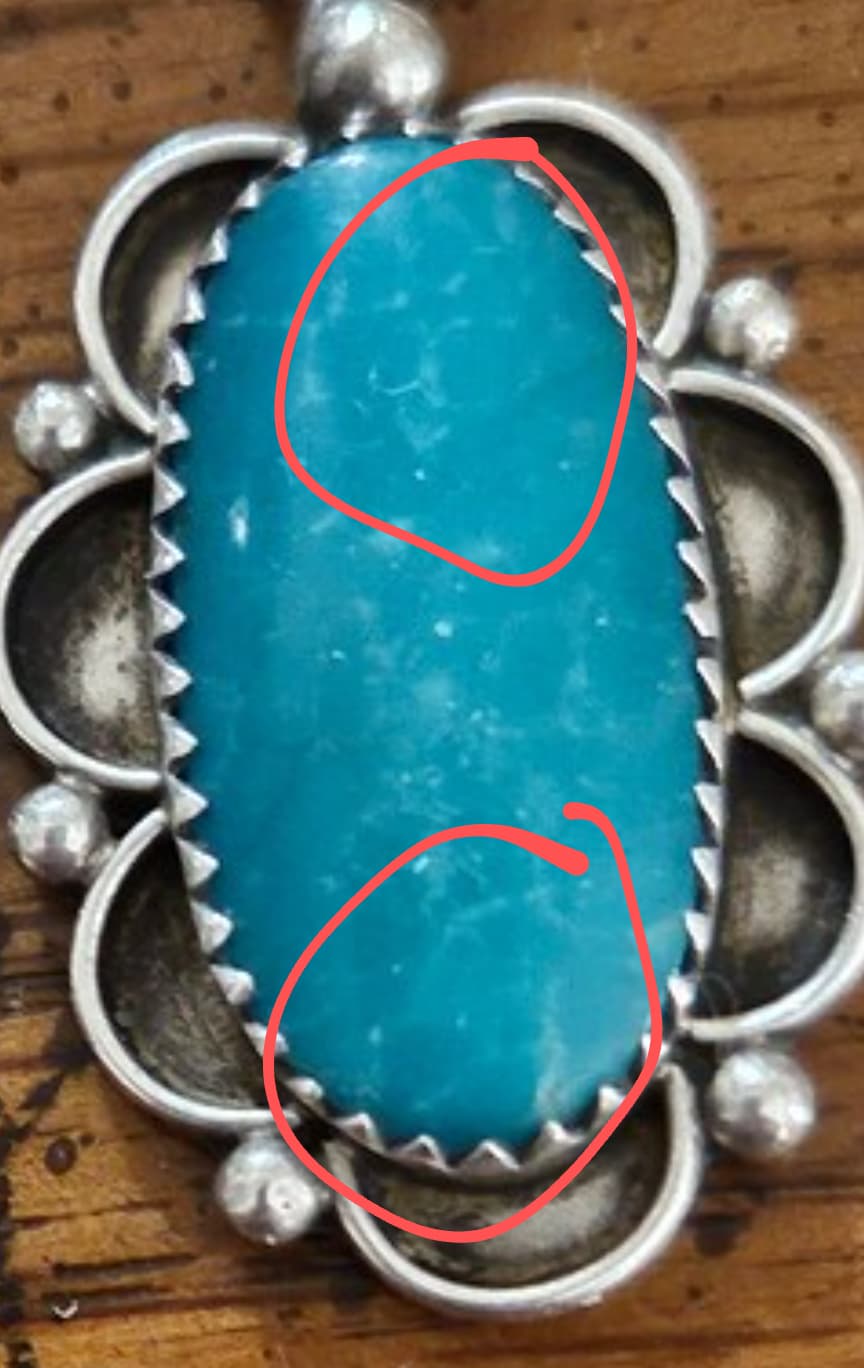
I’m not sure about the one with the white streaks, but the other one kind of looks like it has some water webbing. It’s hard to tell. Here’s the discussion. Stone I.D. - Is this turquoise?
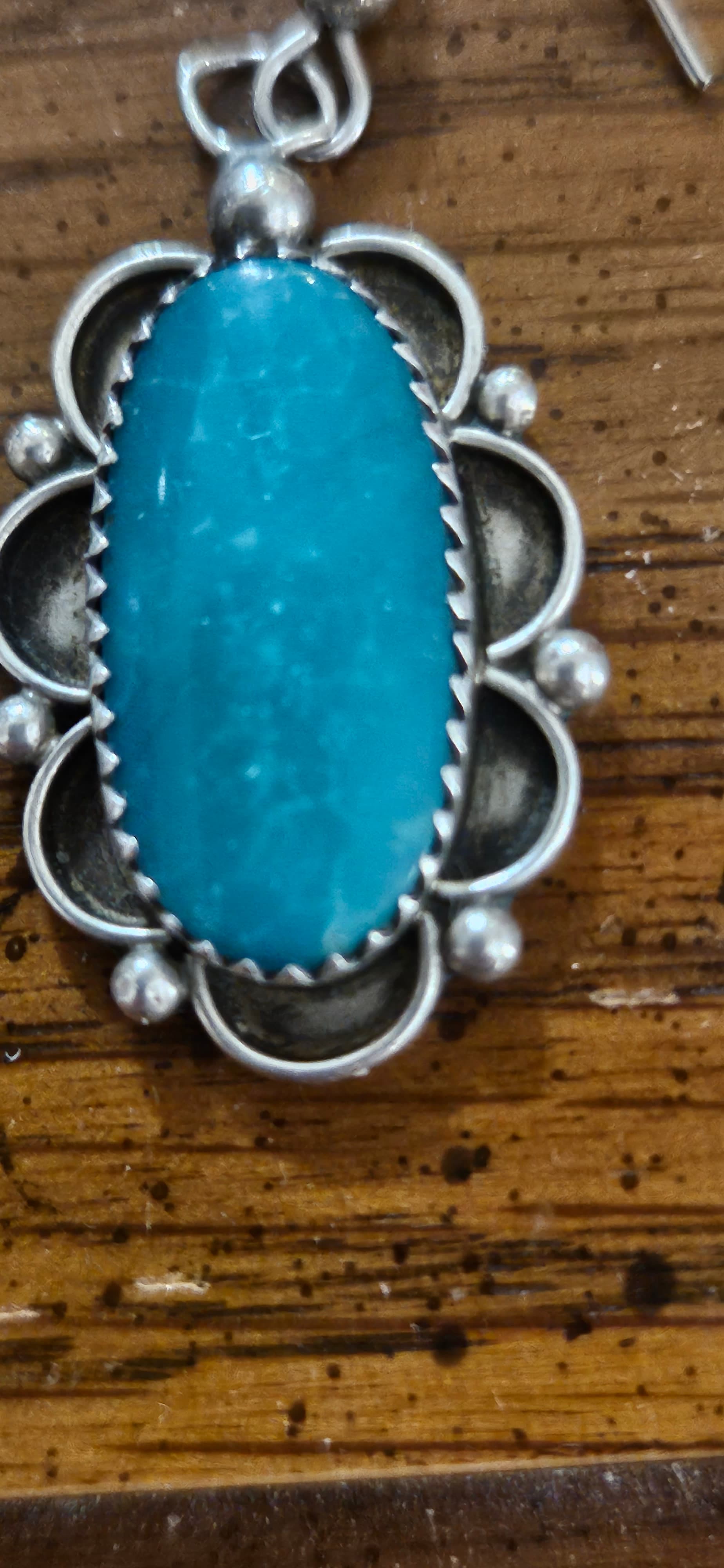
I may be way off base, but if I had to guess I, would guess these are turquoise because of the right stone, which looks like it has some water webbing. I don’t know what the white streak is in the other one. I know that Kingman and Sleeping Beauty can have white matrix which they sometimes darken with black shoe polish, but that seems to be with matrix that’s pitted, not smooth like yours appears to be.
@tepowell Nice earrings. Looking at the earring on the right, it makes me wonder if this could be what’s named “White Water” Turquoise which is from the Campitos mine in Mexico. The water webbing, as mentioned by @Ziacat, is what caught my eye.
If someone comes across a sacrificial piece I’d be happy to start some analyses on it that might give us more data. I’m still up in the air. It does not look like the nice so-called “water web” turquoise to me.
@StevesTrail To me, the stone on the right has some semblance of water webbing. I agree that it’s not like what we’d expect to see from, say, Water Web Kingman turquoise.
Question I’ve wondered about for a while. Is the beautiful waterweb pattern seen in turquoise from all mines, including Chinese, etc? I know about Kingman and I have a nice piece of Morenci waterweb. Logically since turquoise is chemically the same, does the location where it developed and is mined influence the development of waterwebbing. Just curious of the presence of waterwebbing can narrow the list of possible mines.
@Ziacat, OK I see what you are referring to…maybe? But to my eye, I wouldn’t call that waterweb. I may be wrong since I really don’t know what constitutes waterweb; I only can go from what I’ve seen. Goes to show that everything is not black and white
Right, I see what you’re saying. I’m just thinking that small amount made me lean towards the stones being turquoise vs. something else. But I dunno; I wouldn’t sell it with that description or anything.
These look like stabilized Turquoise. I agree with @mmrogers that the white was accentuated because of the stabilization process. I find stabilized stone is warmer to the touch as apposed to the cooler feel of natural rock, and that stabilized has a denser sound when the stone clinks on something as apposed to a natural stone of comparable kind and size makes a higher pitched sound. I can also gently rub a stone on a tooth and feel the difference lol.
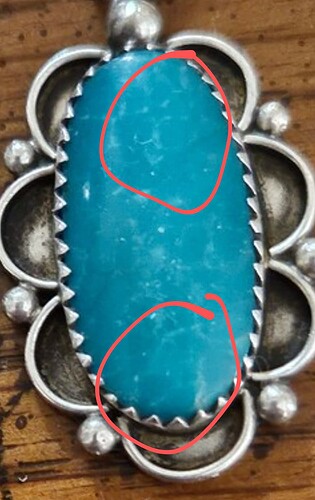
My gosh…I can’t get my mind off water webbing😬. As I recall all waterweb turquoise I’ve seen have a darker turquoise turquoise border (not matrix lol!), fading to much a much lighter turquoise the the center. Can it be the opposite with light color surrounding a darker center as @Ziacat points out in the previous photo:
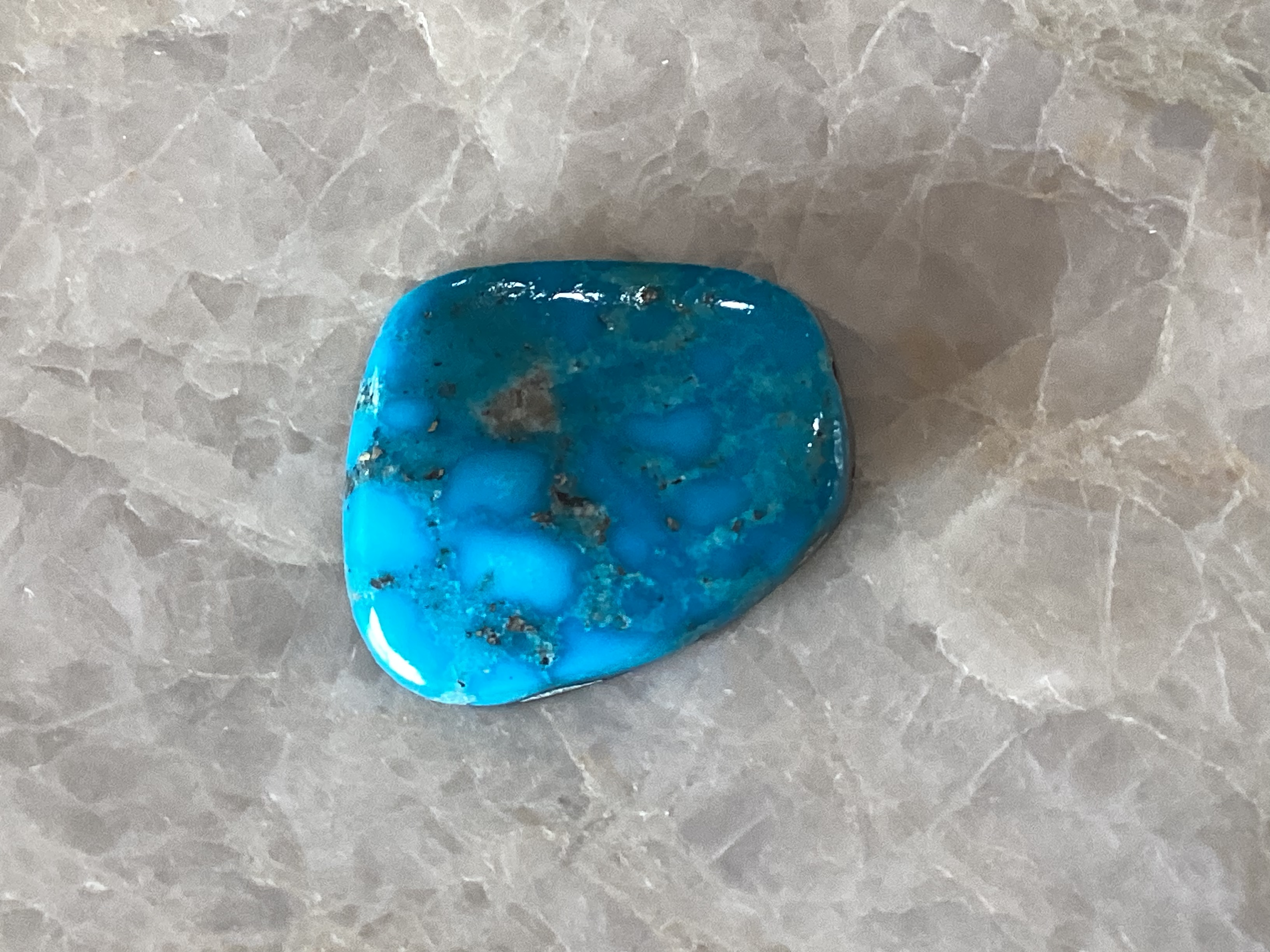
Just curious if anyone has, or has seen, turquoise with this type of webbing.
The lighter color could just be leached hydrated aluminum phosphate with traces of copper. A definitive test would be to perform a mineralogical analysis on a thin section of the rock. Using a universal stage and a polarizing microscope the mineral composition could be determined. SEM would be another way. Just depends how important it is to you and how much money you want to spend to find out. I could find no papers on the subject.
These are still a bit of a mystery! Although I didn’t take a picture when I bought them, I’m almost positive these stones had no white coloration, it has appeared over time, if that gives any clues? I was originally drawn by the dark turquoise color.
 )
)